
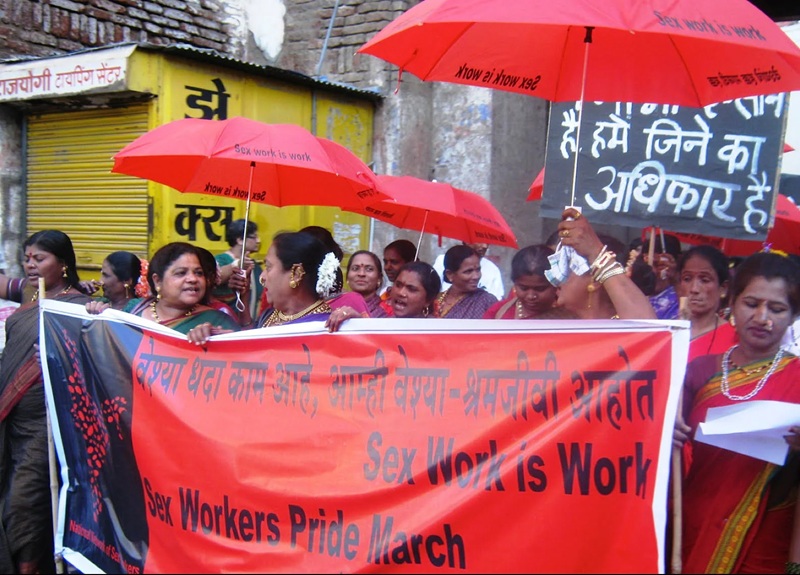
To protect the health and rights of sex workers, the political approach must be rights-based and inclusive. We urge everyone to stand in solidarity with sex workers’ fight for rights. Happy International Sex Workers' Rights Day!
Both nationally and internationally, an increasing number of health and rights organizations are advocating for legal reforms and evidence-based policymaking that protects the health and rights of sex workers.
At the beginning of the 2000s, there were radical changes in the political approach to prostitution, which was linked to human trafficking and organized crime. At the national level, this led to a legal ban on the purchase of sexual services, Section 316 of the Penal Code, while creating a new framework against pimping, Section 315 of the Penal Code.
Today, all activity related to the sale of sex is prohibited, including sex workers’ working communities. The provisions of the Penal Code also interfere with other laws and deprive the party selling sex of general legal protection.
Amnesty International has revealed that Norway is violating its international obligations when it comes to ensuring and protecting sex workers’ rights and legal protection. CEDAW (the UN Convention on the Rights of Women) has criticized Norwegian authorities for not doing enough to protect sex workers from unintended consequences of criminalization, such as increased exposure to violence.
Several Norwegian organizations and service initiatives such as PION, Pro Sentret and Nadheim have documented increased risk and exposure to violence and reduced ability to have control over their own business. This is because sex workers cannot work from their own premises or establish work communities, and because stigma creates and reinforces undesirable behaviour and attitudes in society.
Criminalization reinforces stigma and discrimination. Belonging to various minority groups such as queer people, people with disabilities, migrants and ethnic minorities means that many are exposed to increased stigma on several levels. Trans women who sell sex often experience severe harassment and discrimination in encounters with the police and other public agencies.
Migrant sex workers are, in addition to being particularly vulnerable to sexism and racism, also the main target group for police enforcement, control and surveillance.
PION, Pro Sentret and Nadheim have repeatedly raised with both police, prosecutors and legislators that people who sell sex are subjected to disproportionate interventions and have questioned the legality of law enforcement against a group that is not doing anything illegal.
To protect the health and rights of sex workers, the political approach must be rights-based and inclusive. We urge everyone to stand in solidarity with sex workers’ fight for rights.
Member of the Network
Ordbruk AS v/ Almås og Benestad
Sosialmedisinsk senter i Tromsø
